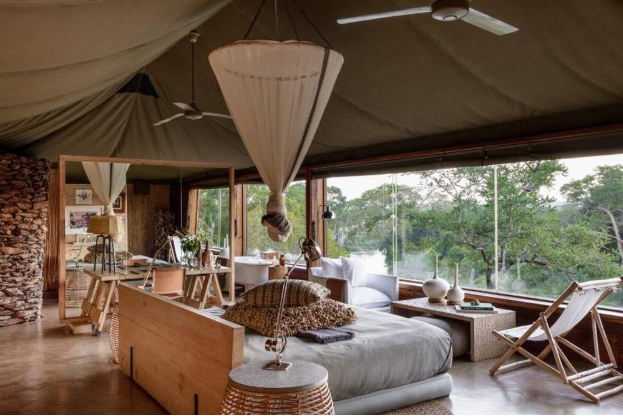
Where world-class comfort meets the world’s greatest wilderness — the Tanzania luxury fly-in safari delivers Africa’s most iconic wildlife experiences without compromise, from first breath to last.
Introduction
There is a particular moment that defines the Tanzania luxury fly-in safari — a moment that no overland journey, however comfortable, can quite replicate. The light aircraft banks low over the Serengeti’s southern plains, dropping toward a grass airstrip carved from the bush, and through the window the landscape below is alive. A herd of elephants crosses a dry riverbed a hundred meters from the runway. A pair of cheetahs rests on a termite mound in the middle distance, their spotted coats gilded by late afternoon light. The aircraft touches down, taxies to a stop, and before the propeller has finished turning, a camp vehicle is waiting on the apron with cold towels, a chilled drink, and a guide whose first words are not directions or instructions but an invitation: “We’ve had a leopard in camp since yesterday. Shall we go?”
This is what the Tanzania luxury fly-in safari delivers from its very first moment: total immersion in a world of extraordinary natural richness, reached efficiently and comfortably, with every logistical detail handled by professionals whose entire purpose is to ensure that the traveler’s only responsibility is to be fully, joyfully present.
The luxury fly-in format has become the definitive mode of premium safari travel in Tanzania — and for compelling reasons. Tanzania’s finest wildlife destinations are separated by distances that make overland travel between them a day-consuming undertaking that reduces time in the field. Light aircraft connections between the country’s network of bush airstrips cover those distances in forty minutes to two hours, arriving guests directly at camp airstrips from which the first game drive can begin within the hour of landing. The result is a safari that maximizes every available hour of Tanzania’s extraordinary wildlife abundance, eliminating the long road transfers that consume the time — and the energy — that could be spent watching lions or tracking leopards or positioning for the perfect golden-hour elephant portrait.
This article is your definitive guide to the Tanzania luxury fly-in safari — covering the destinations, the aircraft, the accommodation, the exclusive experiences, the optimal timing, and every detail that makes this the finest wildlife travel format available anywhere in the world.
What Defines a Luxury Fly-In Safari?
The Format Explained
A Tanzania luxury fly-in safari combines private light aircraft transport between destinations with accommodation at Tanzania’s finest bush camps and lodges — properties that offer world-class hospitality standards in wilderness settings of extraordinary natural richness. The combination of efficient air travel and premium accommodation creates a safari experience that is simultaneously more comfortable, more time-efficient, and more deeply immersive than any road-based alternative.
The fly-in format’s defining advantage is the elimination of compromise. In a standard road-based Tanzania safari, the time required to travel between parks — typically a full day’s driving between the Serengeti and Ngorongoro, or two days between the northern and southern circuits — restricts the number of destinations achievable within a given itinerary and consumes days that could be spent in the field. By contrast, a luxury fly-in itinerary can cover the Serengeti, Ngorongoro, and Tarangire within a single week without sacrificing a single game drive day, moving between properties by air in time for afternoon wildlife viewing at each new destination.
The Light Aircraft Experience
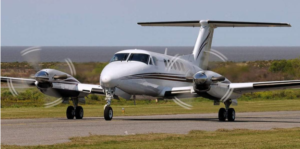
Tanzania’s domestic aviation network is served by a fleet of light aircraft — primarily Cessna Caravans and smaller twin-engine aircraft — operated by carriers including Coastal Aviation, Auric Air, Air Excel, ZanAir, and Regional Air. These aircraft connect a network of over twenty bush airstrips across the northern and southern circuits, including Seronera, Kogatende, Grumeti, Lamai, Ndutu, Kilimanjaro, Arusha, and Zanzibar, among many others.
Flying between destinations in a light aircraft over the Tanzanian wilderness is, in itself, one of the defining experiences of the luxury fly-in safari. At altitudes of 1,500 to 3,000 meters, the landscape below reveals itself in ways that ground-level travel entirely conceals — the full scale of the Serengeti ecosystem extending to every horizon, the volcanic drama of the Ngorongoro highlands, the silver ribbon of the Rufiji River threading through the immensity of Nyerere, and the turquoise arc of the Indian Ocean appearing as the flight approaches Zanzibar. Experienced pilots frequently point out wildlife visible from the air — elephant herds, buffalo gatherings, and the dark mass of the wildebeest migration itself are all visible from altitude when the timing and positioning are right.
Tanzania’s Premier Luxury Fly-In Destinations
The Serengeti: The Essential Anchor
No Tanzania luxury fly-in safari is complete without a chapter in the Serengeti, and no destination in Africa rewards the luxury fly-in format more generously. The park’s 14,763-square-kilometer expanse — a UNESCO World Heritage Site of extraordinary wildlife density — is served by multiple airstrips positioned across the ecosystem’s different zones, allowing luxury operators to position guests precisely where wildlife activity is most intense at the time of their visit.
For luxury fly-in travelers, the Serengeti’s finest properties represent the global gold standard of safari hospitality:
Singita Sasakwa Lodge on the Grumeti Private Game Reserve offers architecture and service at the level of the finest European country houses, set within an exclusive wildlife concession where guests enjoy game drives in areas entirely closed to standard park visitors. The property’s hilltop position provides panoramic views across the western Serengeti comparable to nothing else in the ecosystem.
Four Seasons Serengeti in the central Serengeti combines the service philosophy of one of the world’s leading luxury hotel brands with a central park location of exceptional year-round wildlife productivity. The property’s infinity pool overlooking a waterhole visited by elephant and buffalo is among Africa’s most photographed safari accommodation features.
&Beyond Serengeti Under Canvas offers the most intimate migration-following experience available in the Serengeti — a small-format luxury mobile tented camp that repositions seasonally to remain in the migration’s path, providing guests with the sensation of sleeping precisely where the greatest wildlife spectacle on Earth is currently unfolding.
Nomad Tanzania’s Serengeti Bush Camp delivers a more intimate, owner-operated luxury experience with exceptional guiding — a smaller property whose guides are among the most knowledgeable in the entire Serengeti ecosystem and whose mobile camp positioning during migration season is among the most precise and responsive in Tanzania.
Ngorongoro: Dramatic Settings, Concentrated Wildlife
The Ngorongoro Conservation Area’s crater rim lodges represent some of Africa’s most dramatically positioned luxury accommodation — perched at 2,300 meters on the caldera’s rim, with panoramic views over the 260-square-kilometer enclosed ecosystem below. The combination of dramatic setting, cool highland air, and near-certain Big Five wildlife encounters on the crater floor makes Ngorongoro an indispensable component of any northern circuit luxury fly-in itinerary.
&Beyond Ngorongoro Crater Lodge is the property most closely associated with the theatrical romance of the crater rim — individual suites of extraordinary architectural ambition, butler service of impeccable standard, and crater views that guests consistently describe as among the most spectacular accommodation settings they have encountered anywhere in the world.
One Nature Ngorongoro Lodge offers a more contemporary architectural statement on the crater’s southern rim, with floor-to-ceiling glass walls that make the crater the literal living artwork of every suite — the caldera visible from the bed, the bath, and the private terrace.
Access to the crater floor is exclusively by road from the rim lodges, meaning the fly-in element of the Ngorongoro component concludes at Kilimanjaro International Airport or Arusha with a ground transfer into the highlands — a journey of progressive scenic revelation that experienced operators incorporate as a designed element of the arrival experience rather than a logistical inconvenience.
The Northern Serengeti: Exclusive Migration Territory
The northern Serengeti, accessible via Kogatende and Lamai airstrips, offers some of Tanzania’s most exclusive luxury fly-in safari experiences during the August through October Mara River crossing season. Properties in this zone — including Nomad Tanzania’s Lamai Serengeti, Remote Africa Safaris’ northern camp, and &Beyond Klein’s Camp — provide access to the migration’s most dramatic chapter in settings of considerable luxury with dramatically lower visitor densities than the central park.
The combination of Mara River crossing positioning, world-class camp comfort, and the remote intimacy of the northern Serengeti creates a luxury fly-in experience that regular Serengeti visitors — even those who have made multiple previous visits — describe as distinctly and memorably superior to their prior encounters with this extraordinary park.
Nyerere National Park: Southern Circuit Exclusivity
For luxury fly-in travelers seeking an alternative to the northern circuit’s relative bustle — and for those returning to Tanzania for a second or third time — Nyerere National Park (formerly the Selous Game Reserve) delivers a southern circuit fly-in experience of extraordinary exclusivity and ecological depth.
Africa’s largest protected wildlife area receives a fraction of the visitors that the Serengeti handles annually, and its finest luxury fly-in properties — including Nomad Tanzania’s Sand Rivers Selous, Robin Pope Safaris’ camps, and Roho ya Selous — operate with the intimate, exclusive character that the vast, remote wilderness environment naturally creates. Boat safaris on the Rufiji River add a unique wildlife dimension — hippo pods, Nile crocodiles, and elephant herds viewed from the water’s surface at close quarters — that the exclusively land-based northern circuit cannot offer.
Ruaha National Park: Tanzania’s Remote Luxury Frontier
Ruaha is Tanzania’s largest national park and its most magnificently under-visited premier destination — a vast, remote wilderness of unusual ecological richness that rewards the luxury fly-in traveler willing to venture beyond the northern circuit’s familiar landmarks. Exceptional lion populations — including unusually large prides — alongside leopard, cheetah, elephant, and the endemic greater and lesser kudu provide wildlife encounters of extraordinary quality in a landscape that feels genuinely, uncomplicatedly wild.
The finest Ruaha luxury properties — Kwihala Camp, Jongomero Camp, and Kwihala Serengeti — provide bush hospitality of world-class standard in a setting so remote that the sense of having the entire national park essentially to yourself, shared only with the wildlife, is not an exaggeration but a regular and accurate description of the experience.
Zanzibar: The Luxury Beach Finale
The Tanzania luxury fly-in safari reaches its natural conclusion — or its restorative beginning, depending on itinerary design — in Zanzibar. Direct light aircraft connections from mainland bush airstrips cover the distance to Zanzibar’s international airport in forty minutes to three hours depending on origin, delivering guests from the dust and grandeur of the bush to the turquoise waters of the Indian Ocean within the same day.
Zanzibar’s luxury accommodation sector — Baraza Resort and Spa, Zuri Zanzibar, Kilindi, and the extraordinary Manta Resort on Pemba Island — provides Indian Ocean hospitality of global distinction, with private villas, spa facilities of exceptional quality, and the Indian Ocean’s finest marine environments immediately accessible. The transition from Serengeti bush camp to Zanzibar beach villa, executed seamlessly within a single day’s travel, is the luxury fly-in safari’s most satisfying single-day experiential arc.
The Luxury Fly-In Experience: What to Expect
Accommodation Standards
Tanzania’s finest luxury fly-in safari properties share a set of standards that distinguish them from the broader accommodation market: individual suite or tent accommodation with en-suite bathroom facilities of genuine luxury standard, private viewing decks or plunge pools with unobstructed wilderness views, full-board dining with menus of serious culinary ambition prepared from fresh ingredients, dedicated naturalist guides whose ecological knowledge and interpersonal quality are at the highest levels, private safari vehicles for exclusive game driving, and camp management teams whose service philosophy reflects a genuine understanding that every detail of the guest experience matters.
Private Game Drives
Luxury fly-in safari guests drive on private vehicles — a critical distinction from shared-vehicle standard safaris that makes an enormous difference to the quality of the wildlife experience. A private vehicle means positioning control, extended time at sightings, route flexibility based on live wildlife intelligence, and the ability to move at a pace that reflects the guests’ interests rather than a schedule designed for mixed-priority groups. For photographers, private vehicles are essential. For all luxury travelers, they are the correct standard.
Expert Naturalist Guides
The quality of the guide is the single most important variable in the luxury fly-in safari experience — more important than the vehicle, the accommodation, or even the destination. Tanzania’s finest luxury camps employ guides with multiple years of specific park experience, formal naturalist qualifications, and a genuine passion for their ecosystem that comes through in every moment of interpretation. These guides do not merely identify species and relay facts. They tell stories — ecological narratives that connect each observation to its broader context within the living system of the ecosystem — and they do so with the accumulated depth of people whose entire professional and personal life is oriented toward understanding and sharing the world they inhabit.
Optimal Timing for Tanzania Luxury Fly-In Safaris
January and February deliver the Serengeti’s calving season on the southern plains — the migration’s most emotionally intense chapter — alongside Zanzibar’s finest northeast monsoon beach conditions. An outstanding combination for luxury fly-in itineraries that incorporate Ndutu positioning and a Zanzibar finale.
June through October provides dry-season game-viewing reliability across all northern Tanzania parks, the Serengeti’s iconic Mara River crossings from August through October, and the finest bush light conditions for photography. This is peak season and demands booking twelve months in advance for the finest properties.
November and December offer excellent shoulder-season value — green Serengeti landscapes of vivid beauty, dramatically reduced visitor numbers, and significant accommodation rate reductions at many premium properties — alongside good Zanzibar conditions for the beach component.
Key Takeaways
- The Tanzania luxury fly-in safari maximizes time in the field by connecting destinations via light aircraft rather than consuming game-drive days in overland road transfers — the most time-efficient and experientially complete safari format available.
- Light aircraft travel between Tanzania’s bush airstrips is itself a defining luxury experience — aerial perspectives of the Serengeti, the Ngorongoro highlands, and the Indian Ocean approach to Zanzibar are available from no other vantage point.
- The northern circuit — Serengeti, Ngorongoro, Tarangire — provides the luxury fly-in format’s most popular and most productive wildlife itinerary, combining the world’s greatest wildlife density with Tanzania’s finest luxury properties.
- Singita Sasakwa, Four Seasons Serengeti, &Beyond Serengeti Under Canvas, and Nomad Tanzania’s Serengeti Bush Camp represent the global gold standard of luxury safari accommodation.
- &Beyond Ngorongoro Crater Lodge and One Nature Ngorongoro Lodge offer crater rim settings of dramatic romantic and architectural distinction unavailable in any other safari accommodation category worldwide.
- The southern circuit — Nyerere and Ruaha — delivers exclusivity, remoteness, and boat safari experiences for luxury travelers seeking the wild frontier beyond the northern parks.
- Private game drives on exclusive vehicles are a non-negotiable standard of the luxury fly-in safari — positioning control, extended sighting time, and route flexibility define the difference between luxury and standard safari experiences.
- Guide quality is the single most important determinant of luxury fly-in safari experience quality — always verify guide ecological credentials, specific park experience, and language proficiency before booking.
- June through October is the peak booking window; January–February offers the exceptional dual combination of calving season and Zanzibar beach perfection.
- Advance booking of 12 months is essential for the Serengeti’s finest properties during peak season — limited inventory at exclusive camps is the primary constraint on luxury fly-in itinerary design.
Questions & Answers
Q: What is the most significant practical advantage of a fly-in safari over a standard road-based safari in Tanzania? Time in the field is the definitive advantage. Tanzania’s northern circuit parks — Serengeti, Ngorongoro, Tarangire, and Manyara — are separated by road journeys of two to five hours each, meaning that a standard road-based itinerary covering all four parks in a week loses two to three full days to travel rather than wildlife viewing. The same itinerary covered by light aircraft retains every day for game drives — flying between Tarangire and the Serengeti in forty-five minutes instead of five hours means that guests land in time for an afternoon game drive at the new destination rather than arriving at dusk after a day in a vehicle. For a seven to ten-night luxury safari, this efficiency difference translates into two to three additional full game-drive days — a substantial and valuable difference in total wildlife encounter time.
Q: How do I choose between the different Serengeti zones for a luxury fly-in safari? Zone selection should be driven by the Great Migration’s current positioning at the time of your visit. January through March: book central Serengeti and Ndutu-area camps for calving season. April through May: the migration is transitioning northward through the central and western corridor. June through July: western corridor camps near Grumeti for early river crossing action. August through October: northern Serengeti camps near Kogatende and Lamai for Mara River crossings — the migration’s peak dramatic chapter. November through December: the herds are returning south, and central Serengeti camps combine good migration contact with year-round predator activity. A specialist luxury fly-in operator will position you precisely in the migration’s current epicenter based on live intelligence, adjusting recommendations as your travel date approaches.
Q: What luggage restrictions apply to light aircraft used in Tanzania luxury fly-in safaris? Most light aircraft operated on Tanzania safari routes impose a strict 15-kilogram baggage limit in soft-sided bags — hard-sided suitcases cannot be accommodated in the small cargo holds of Cessna Caravans and similar aircraft. A carry-on allowance of approximately 5 kilograms is typically permitted separately. These restrictions are genuine operational constraints, not formalities, and are enforced at check-in. Overage bags are frequently left behind at the departure point. For luxury fly-in travelers accustomed to extensive wardrobe packing, this requires disciplined pre-trip preparation: a lightweight soft-sided safari duffle of 15 kilograms for the bush component, with any excess luggage stored at your Kilimanjaro or Arusha hotel or the operator’s office. Your operator should provide comprehensive luggage guidance well in advance, including recommendations for high-quality lightweight safari duffles that meet both the weight limit and the practical demands of bush travel.
Q: What distinguishes a genuine luxury fly-in safari operator from a standard operator offering light aircraft connections? Genuine luxury fly-in operators are distinguished by the depth and specificity of their knowledge rather than by the addition of aircraft to a standard safari package. They know which specific Serengeti concessions are currently productive for leopard, which Ngorongoro crater zone holds the rhino population in October, which Nyerere boat safari route provides the best wild dog sighting probability in the dry season, and which northern Serengeti camp’s chef is producing the finest bush cuisine this season. They maintain current, first-hand knowledge of all properties they recommend through regular site visits. They understand that luxury fly-in safari guest satisfaction is determined by dozens of small details — guide chemistry, camp atmosphere, meal quality, tent positioning relative to wildlife corridors — that booking platforms and brochures cannot capture. The easiest test: ask a prospective operator to describe the specific qualities of each guide currently working at the Serengeti property they recommend, and to explain the week-by-week movement pattern of the migration in the month of your planned visit. Their answers will tell you immediately whether they possess genuine expertise or are packaging logistics around knowledge they do not have.
Q: Is a Tanzania luxury fly-in safari appropriate for travelers with limited previous safari experience? The luxury fly-in format is not merely appropriate for first-time safari travelers — it is, in many respects, the optimal format for first-time visitors who want to experience Tanzania’s wildlife landscape at its most impressive and most comprehensive within a limited time window. The efficiency of light aircraft travel allows first-time visitors to cover the Serengeti, Ngorongoro, and potentially Tarangire within a single week — delivering the full breadth of Tanzania’s northern circuit wildlife variety without the fatigue and lost game-drive time of road transfers. The quality of guides at luxury fly-in properties means that first-time travelers receive interpretation of a depth and accessibility that makes the ecological complexity of the bush both comprehensible and deeply engaging. And the accommodation standard ensures that physical comfort is never a limiting factor in the traveler’s ability to be fully present and open to the extraordinary wildlife encounters that Tanzania delivers.
Q: How does the Tanzania luxury fly-in safari compare in cost to a luxury overland safari of equivalent duration? A Tanzania luxury fly-in safari typically costs 25 to 40 percent more than a luxury overland safari of equivalent accommodation quality and duration, primarily due to domestic flight costs — typically USD 300 to USD 600 per sector per person depending on route and carrier — accumulated across a multi-destination itinerary. A five-destination northern circuit fly-in itinerary might involve four or five flight sectors, adding USD 1,200 to USD 3,000 per person to the total cost compared to road transfer equivalent. However, this premium purchases not merely convenience but meaningfully more wildlife time in the field — the additional game-drive days delivered by efficient air travel create a genuinely more productive and more varied safari experience that the cost differential, for most luxury travelers, straightforwardly justifies.
Conclusion
The Tanzania luxury fly-in safari represents the perfection of a travel format — the point at which all the elements of an extraordinary journey have been refined and assembled into an experience where nothing is compromised, nothing is wasted, and every hour of every day is oriented toward the encounter with wild Africa that brought you there.
This is not a modest claim. But it is an accurate one. Tanzania’s wildlife is the finest in the world. The light aircraft that delivers you between its finest destinations is efficient, scenic, and experientially rewarding in its own right. The accommodation that receives you at each landing — whether the architectural theatre of a Ngorongoro crater rim lodge, the canvas intimacy of a Serengeti mobile camp, or the Indian Ocean warmth of a Zanzibar beach villa — is among the finest hospitality available at any price, in any format, anywhere on Earth. And the guides who lead you through it all carry within them a depth of ecological knowledge, a genuine passion for the natural world, and an ability to share both that transforms every game drive from a wildlife observation into a masterclass in understanding what the living world actually is.
The luxury fly-in safari gives you Tanzania at its most generous and most revealing — the Serengeti in every season of its extraordinary annual drama, the Ngorongoro Crater’s ancient geological wonder, the remote wildness of Nyerere or Ruaha, and the Indian Ocean beauty of Zanzibar, all connected by the light aircraft that covers in minutes what overland travel would consume in days.

