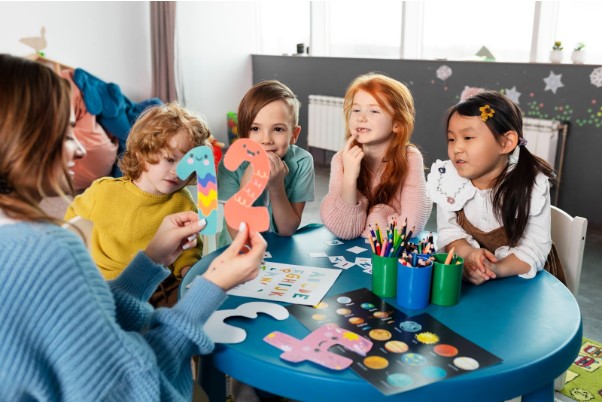
Childhood is a very important period when social skills are formed, which will determine the future relationship and interaction of a child. Though these skills are first taught by family members, childcare centers and preschools offer a special situation where children can practice and further develop their communication and behavior.
Children are surrounded by their peers and trained caregivers to learn to express themselves, collaborate with others, and make friends. Such experiences at an early age form a solid base of success in school and life. If you are unsure how preschools improve social skills in children, the article will help you understand.
1. Learning to Communicate Effectively
Daily communication is one of the greatest advantages of a childcare or preschool setting. Children are also taught to communicate their needs in a group, share ideas, and listen to others. To enhance the vocabulary and confidence of children, teachers make them solve problems using words rather than actions. They eventually learn to interpret body language, take turns during a conversation, and respect other opinions.
2. Practicing Cooperation and Teamwork
A childcare center and preschool provide group activities including games, story time, and art projects for children. These activities educate children on cooperation, sharing of materials, and waiting to take their turn. Learning to work with peers makes children more patient and empathetic. They learn that collaborating with peers can help them make the work easier and fun, which will help them in their school years and later in life.
3. Building Friendships and Emotional Connections
Friendship is a major aspect of childhood, and daycare facilities and preschool offer the best environment for making friends. Children interact with other children of their age, and this helps them to identify with others and develop bonds. They are taught how to make an introduction, invite others to play, and keep friends. These bonds make children feel that they belong and enhance their self-esteem, which is crucial in the emotional development process.
4. Developing Conflict-Resolution Skills
Conflicts are an everyday occurrence in social life, and daycare programs provide children with a secure environment to understand how to deal with them. The teachers expose children to conflicts by teaching them how to use words, listen to one another, and come to fair solutions. These experiences are important for learning problem-solving skills and making the children realize the value of compromise and empathy. Conflict resolution at an early age equips them for future healthy relationships.
5. Encouraging Independence and Confidence
A childcare or preschool environment will promote independent decision-making in children, including the selection of activities or control of personal objects. These experiences create a sense of independence and self-confidence, which are the fundamental elements of positive social development. Children who feel confident will be more ready to participate in group activities, initiate discussion, and seek new friends without any fear. Therefore, enrolling your child in a quality childcare or preschool program can give them the social tools they need to succeed both inside and outside the classroom.

